How to pack fragile items for UK house removals
If you are moving house in the UK, packing fragile items is one of those jobs that looks simple until you are halfway through it, staring at a cupboard full of plates, glasses, picture frames and that one awkward lamp you never quite know where to put. How to pack fragile items for UK house removals is really about reducing risk, saving time on moving day, and making sure your breakables arrive in one piece. Done properly, it also keeps the whole move calmer. And let's face it, moving day already has enough noise, boxes, tape, and last-minute panic without adding shattered crockery to the mix.
This guide walks you through the practical side of packing delicate belongings for a British home move. You will find step-by-step advice, useful comparisons, common mistakes to avoid, and a realistic checklist you can follow without turning the whole process into a military operation. If you are using a house removals service, booking packing and unpacking services, or handling the move yourself, the same basic principles apply: good materials, careful wrapping, firm box filling, and smart labelling. Simple enough, but not always easy.
Table of Contents
- Why fragile packing matters in a UK house move
- How fragile packing works in practice
- Key benefits and practical advantages
- Who this is for and when it makes sense
- Step-by-step guidance
- Expert tips for better results
- Common mistakes to avoid
- Tools, resources and recommendations
- Law, compliance, standards and best practice
- Options, methods and comparison table
- Case study or real-world example
- Practical checklist
- Conclusion
- Frequently asked questions
Why fragile packing matters in a UK house move
Fragile items are usually the first things to get damaged in a move, not because removal teams are careless, but because breakables are unforgiving. One loose wine glass can crack under pressure from a heavy pan. One half-empty box can collapse if it is stacked badly in the van. One unwrapped plate can chip when the vehicle brakes sharply at a roundabout. UK roads, especially in busy towns and London traffic, make secure packing more than just a nice-to-have.
What makes this especially important is the mix of items people often underestimate. It is not just obvious things like glassware and ornaments. Think kitchen ceramics, mirrors, framed art, ceramics, small electronics, collectibles, and even some houseplants in fragile pots. These are the belongings people usually wish they had packed better after the fact. Too late then, obviously.
Careful packing also helps removal teams load your belongings more efficiently. A properly filled box is easier to stack. A clearly marked box is easier to place in the right part of the van. If you are moving with a man with a van or arranging a larger removal company, the same logic holds: better packing means smoother handling and less stress for everyone.
Expert summary: fragile packing is not about overpacking every box. It is about matching the right materials to the right item, filling gaps so nothing shifts, and making each box easy to carry, stack, and open safely at the other end.
How fragile packing works in practice
The whole process comes down to three things: protection, stability, and clarity. First, you protect the item itself with wrapping or cushioning. Second, you stop movement inside the box with void fill such as crumpled paper, packing paper, or soft padding. Third, you label the box so the loading team knows exactly what is inside and how it should be handled.
That sounds straightforward, but the details matter. A glass tumbler wrapped in a single sheet of newspaper is still vulnerable. A plate boxed upright with no separation can chip at the edges. A mug packed with its handle exposed is asking for trouble. In real moving jobs, the boxes that survive best are usually the ones that feel boringly solid when lifted. No rattling. No sagging. No guessing.
If you are using home moves support or booking a local team through removals near me, it helps to understand the logic behind what movers expect. Most professional crews assume boxes are sealed, balanced, and labelled. They can move carefully, but they cannot compensate for poor packing every time. Truth be told, that is where many avoidable breakages start.
What good fragile packing looks like
- Each item is wrapped individually.
- Heavy items are packed in smaller boxes, not oversized ones.
- Gaps are filled so the contents do not move.
- Boxes are closed with strong tape and not overfilled.
- Fragile labels are visible on more than one side.
- More delicate boxes are kept separate from books, tools, and other dense items.
Key benefits and practical advantages
Packing fragile items properly gives you more than just peace of mind. It can make the entire move quicker, cleaner and less expensive in the long run. Breakages are annoying enough on their own; replacing them mid-move or after the move is worse. Nobody wants to spend the first evening in a new kitchen with two plates and a borrowed mug.
Here are the biggest advantages:
- Less damage risk: the obvious one, but still the main reason.
- Faster unloading: labelled fragile boxes can be placed safely and unpacked in the right order.
- Better van use: compact, balanced boxes stack more neatly in a moving van or larger removal truck.
- Lower stress: you spend less time worrying about breakables on moving day.
- Cleaner unpacking: organised packing means fewer awkward surprises.
There is also a subtle benefit people rarely mention: once you know how to pack delicate items well, the rest of the move becomes more manageable. You naturally sort your belongings with more intention. You make better decisions about what to keep together, what to carry yourself, and what can go with the rest of the load.
Who this is for and when it makes sense
This advice is for anyone moving a home in the UK, but especially for people with kitchens full of crockery, home offices with monitors and glass shelves, or families with sentimental items that cannot be replaced. If you are moving from a flat in a narrow London street, you may have less time to load and unload, which makes packed boxes even more important. A slight knock in a hallway can be enough to ruin a badly prepared box.
It makes particular sense in these situations:
- You are moving without full packing help and need a self-pack method.
- You have delicate antiques, art, or inherited items.
- Your move includes long carry distances, stairs, or tight access.
- You are using a smaller vehicle such as a man and van service and need every box to be stable.
- You want to reduce the chance of post-move breakages in storage or transit.
If you would rather hand the whole job over, a good house mover can often advise on what should be packed separately, what is safe for the van, and what might need extra wrapping. That said, even if you use professional help, a little pre-sorting from you can save time.
Step-by-step guidance
1. Gather the right materials first
Before you wrap a single plate, get everything you need out on a clear surface. Half the pain comes from running around the house looking for more tape with a box open on the floor and a glass already in your hand. You will usually need double-walled boxes for heavier fragile items, packing paper, bubble wrap, strong tape, scissors, marker pens, and maybe cardboard dividers for glasses or bottles.
2. Sort items by weight and shape
Keep similar items together. Glasses with glasses. Plates with plates. Small ornaments with other small ornaments. Mixing awkwardly shaped things tends to create pressure points. A stack of plates is easier to protect than a box of random kitchen pieces. If you have extra-delicate pieces, separate them now rather than later.
3. Wrap each item individually
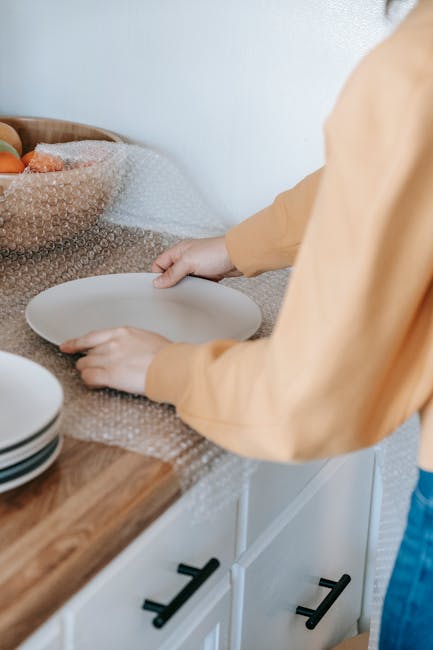
This is the bit people try to rush, and it shows. Wrap every item on its own, especially ceramic, glass, porcelain, and framed pieces. For glasses and cups, stuff the inside lightly with paper where appropriate, then wrap the outside. For plates, wrap them one by one rather than making a thick bundle that cracks the bottom item under pressure.
4. Build a padded base in the box
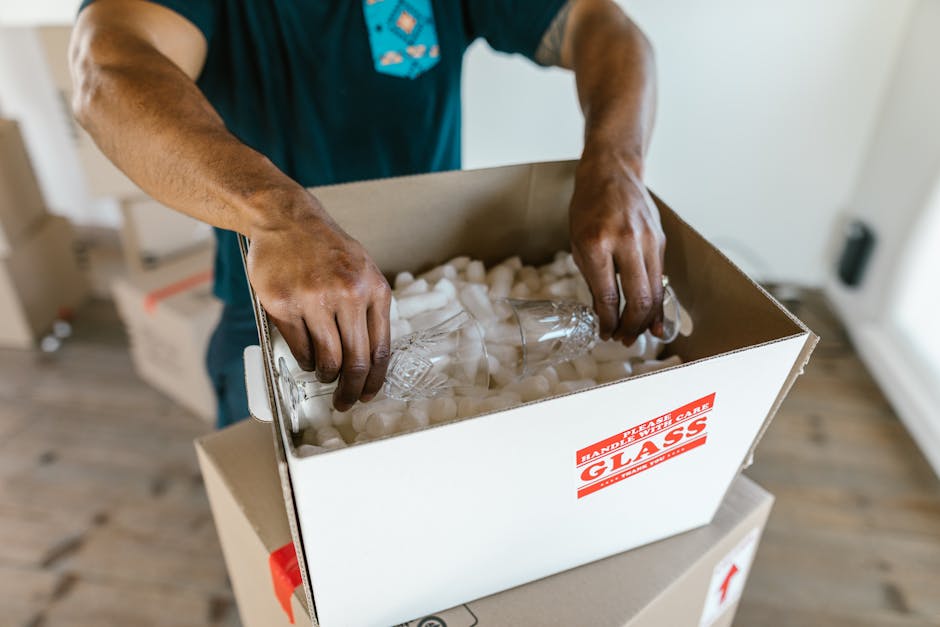
Add a layer of scrunched paper, folded packing paper, or soft cushioning at the bottom. It should not be mushy, just enough to absorb knocks. That base matters more than most people think. Boxes are often placed down faster than they are picked up, so the bottom layer takes the first impact.
5. Pack tightly but not forcefully
Place items in the box so they cannot move, but do not jam them in. If there is too much empty space, add more padding. If the lid will not close without pressure, you have overpacked. Overfilled boxes split. Underfilled boxes crush. Both are irritating in different ways.
6. Fill gaps and top up cushioning
Use paper, towels, or soft packing material to fill the spaces around items. The aim is to stop shifting, not to create a solid brick. You should be able to gently shake the box without hearing objects knock together. If you can hear it, the van will hear it too.
7. Seal, label and orient the box clearly
Use strong tape on the seams and label the box on multiple sides with words like fragile, this way up, and a room destination. If the box contains especially delicate pieces, note that too. For example: "Fragile - kitchen glassware" or "Fragile - picture frame and mirror". Clear labels help the team handling your move place the box safely in the right part of the vehicle.
8. Keep important fragile items with you if needed
Some items are best transported separately, especially if they are small, valuable, sentimental or irreplaceable. Documents are one thing, but family heirlooms, jewellery, and certain electronics may be safer in your own vehicle. Not everything needs to ride in the van.
Expert tips for better results
There are a few details that make a surprisingly big difference. In our experience, the best-packed fragile boxes tend to follow the same rhythm: wrap, cushion, test, label, and move on. No drama. No overthinking. Just method.
- Use smaller boxes for heavier breakables. A box of plates should be manageable with one hand if possible.
- Pack plates vertically rather than flat where practical. This reduces pressure on the bottom item.
- Protect handles and corners first. That is where damage often begins.
- Keep very delicate pieces separate from everyday kitchenware.
- Do a gentle shake test. If things move, add more fill.
- Take photos of valuable items before packing. This can help you keep track of condition and contents.
- Use towels or soft linens carefully. They can help, but they should not replace proper wrapping for glass or ceramics.
If your move involves larger furniture, you may also want to look at furniture pick up or broader removal services support. Fragile packing does not exist in a vacuum; it has to fit the wider moving plan. That means thinking about what goes in first, what needs a separate label, and what should never be crushed under a sofa cushion. Sounds obvious, but it happens.
Common mistakes to avoid
Most breakage is preventable. The trouble is that many people make the same few mistakes every time they move. They do not always look like mistakes in the moment, which is why they keep happening.
- Using oversized boxes: too much weight in one box makes it hard to carry and easier to crush.
- Mixing heavy and fragile items: books and glassware should not share a box.
- Leaving voids inside boxes: empty space invites movement and impact damage.
- Wrapping everything in one big bundle: individual protection matters.
- Trusting old, weak boxes: if the cardboard is soft or damp, replace it.
- Ignoring labels: if nobody can see what is inside, the box may be handled like ordinary load.
- Overusing tape instead of proper structure: tape holds a box closed, but it does not fix poor packing.
Another common issue is packing fragile items too late in the day. By evening, people are tired, rushed and less careful. That is when chipped mugs happen. If possible, pack fragile goods earlier, when you still have enough focus to do the job properly. A slightly boring Sunday afternoon can save you a lot of grief later.
Tools, resources and recommendations
You do not need specialist equipment for every fragile item, but the right basic tools make the job much safer and faster. If you are already arranging a move through removals or speaking to a removal company, ask what packing materials they recommend and whether they can supply them as part of the service.
Useful packing materials
- Double-walled boxes: stronger and more reliable for delicate or heavier contents.
- Packing paper: cleaner and more flexible than newspaper for wrapping.
- Bubble wrap: useful for very fragile or irregular items.
- Cardboard dividers: ideal for glasses, bottles and mugs.
- Strong packing tape: helps keep the box sealed under movement and stacking.
- Marker pens: for clear room labels and handling notes.
- Void fill: scrunched paper or soft cushioning to stop shifting.
When professional help is worth considering
If you have a large number of breakables, limited time, or high-value items, professional packing may be worth the extra cost. It is not just for luxury homes. It can be sensible for busy families, older movers, or anyone who simply does not want to spend two days wrapping crockery in the kitchen. If you want a fully supported move, packing and unpacking services can remove a lot of pressure.
Law, compliance, standards and best practice
For most household moves, there is no special legal rule that says exactly how you must pack fragile items. The more relevant issues are general duty of care, sensible handling, and the terms agreed with your mover. In practical terms, that means if you want breakables handled safely, you should pack them in a way that is actually safe to transport. Not glamorous, but that is the reality.
If you are using a removals provider, check the service terms and insurance arrangements before the move. Different companies set different expectations around owner-packed boxes, high-value items, and items that were not properly protected. It is wise to read the terms and conditions and the insurance and safety information so you know what is covered and what is not.
Good practice also includes:
- making boxes safe to lift without strain or collapse;
- labelling hazardous or extremely delicate contents clearly;
- not overloading one box with too much weight;
- keeping routes clear during loading and unloading;
- following the mover's instructions on stacking and placement.
If you are booking a larger commercial or mixed-use move, the same principles still matter. Businesses moving glassware, display items, samples or equipment should take even greater care, especially where continuity and breakage costs matter. In that case, commercial moves support may be more appropriate than a simple man-and-van booking.
Options, methods and comparison table
There is more than one way to pack fragile items well. The best method depends on the type of item, how much time you have, and how much protection you want. Here is a simple comparison to help you decide.
| Method | Best for | Pros | Limitations |
|---|---|---|---|
| Individual wrapping with packing paper | Plates, mugs, ornaments | Clean, flexible, easy to shape around items | May need extra padding for very delicate pieces |
| Bubble wrap plus outer paper layer | Glass, frames, decorative items | Strong cushioning and good impact protection | Bulkier and slower to pack |
| Divided boxes | Glasses, bottles, similar small breakables | Stops contact between items | Less useful for unusual shapes |
| Soft textile cushioning | Light fragile items and space filling | Handy when you are short on packing materials | Not enough on its own for high-risk items |
| Professional packing service | High-value or time-sensitive moves | Fast, structured, lower stress | Costs more than DIY packing |
For many households, the best choice is a mix. Use proper wrapping for your most delicate items, dividers for glassware, and professional help if you have a lot of valuable or awkward pieces. That hybrid approach is common, and to be fair, it is often the smartest one.
Case study or real-world example
Imagine a family moving from a two-bedroom flat in South London to a terraced house with narrower access. The kitchen contains everyday plates, glass tumblers, a few sentimental serving bowls, and some framed prints. They have limited time because the keys are not released until mid-afternoon, so the packing window is tight.
Instead of throwing everything into one large box, they split the job into smaller groups. Glassware goes into a divided box with paper fill. Plates are wrapped individually and packed upright in a smaller box. The framed prints are wrapped in paper, then bubble wrap, then placed flat between soft items. Each box is labelled on the top and two sides. The family also keeps one box of essential fragile bits separate so it can be unloaded first. The result? No chips, no collapsed box, and a much calmer first evening in the new home.
That sort of move is not dramatic. It is just organised. And honestly, organised usually wins.
Practical checklist
Use this checklist before sealing your fragile boxes. It is simple, but it catches the common problems.
- Have I sorted fragile items by type and weight?
- Have I wrapped each item individually?
- Are the boxes strong enough for the contents?
- Have I added cushioning to the bottom of each box?
- Have I filled all gaps so nothing can move?
- Have I avoided mixing heavy items with breakables?
- Does the box close without pressure or bulging?
- Have I labelled it clearly as fragile and added the destination room?
- Have I set aside any especially valuable items for separate transport?
- Have I checked whether I need extra help from a removal team?
If you are still unsure, a sensible next step is to compare the support available through house removal services and decide whether full packing help would save time. Sometimes it does. Sometimes you only need a bit of advice and a stack of decent boxes.
Conclusion
Knowing how to pack fragile items for UK house removals is less about perfection and more about method. Wrap carefully, keep weight balanced, fill every gap, label clearly, and do not overload the box just because you have one last plate to squeeze in. If you keep those basics in mind, you will protect most of the things that matter and make moving day feel far more manageable.
That is really the goal: fewer surprises, fewer breakages, less scrambling in the hallway while someone asks where the kettle box went. Pack the fragile stuff properly and you give yourself a much better chance of starting life in the new place on the right foot.
Get a free quote today and see how much you can save.
And if you would like to understand more about the people behind the service, you can always read about us or explore the wider range of removal companies options available for your move.
Frequently Asked Questions
What is the best way to pack fragile items for a house move?
The best way is to wrap each item individually, use strong boxes, fill empty spaces with cushioning, and label the box clearly. The key is to stop movement inside the box, because movement causes most breakages.
Should I use newspaper or packing paper for fragile items?
Packing paper is usually cleaner and more practical, while newspaper can leave ink marks on some items. For kitchenware, glass and ceramics, packing paper is generally the safer choice.
Can I pack fragile items in clothes or towels?
Yes, but only as extra cushioning. Clothes and towels can help fill gaps, yet they should not replace proper wrapping for delicate objects such as glasses, ornaments or framed items.
How do I pack glasses so they do not break?
Wrap each glass separately, add paper inside if needed, and place them in a divided box or a well-padded small box. Keep them upright and make sure they cannot knock together.
Is bubble wrap necessary for every fragile item?
No, not for every item. Some everyday fragile items are fine with packing paper and good void fill. Bubble wrap is most useful for highly delicate, valuable or oddly shaped belongings.
Should fragile boxes be marked on all sides?
Yes, that is best practice. Label at least two sides, and ideally the top too, so the box remains identifiable no matter how it is stacked in the van.
What should I do with very valuable fragile items?
Keep them separate if possible and transport them yourself or discuss special handling with your mover. Small valuable items are often safer away from the main load.
How full should a fragile box be?
Full enough that nothing shifts, but not so full that the lid bulges or the box becomes hard to close. If the contents rattle, add more padding. If the box strains, remove something.
Do removal companies pack fragile items for you?
Some do, especially if you book a full packing service. Others may expect owner-packed boxes. It is sensible to check the service details before moving day.
Can I use a man and van service for fragile items?
Yes, but only if the items are properly packed and the service is suitable for your load. A man with van removal option can work well for smaller moves, provided the boxes are secure and easy to stack.
How far in advance should I pack fragile items?
Ideally, start a few days before the move if possible. Fragile items take longer than they look, especially if you are wrapping glassware or artwork carefully. Rushing is where mistakes creep in.
What is the biggest mistake people make when packing breakables?
The biggest mistake is leaving too much empty space in the box or packing too many heavy items together. A box that moves internally is much more likely to fail during loading or transit.
Should fragile items go in the removals van last?
Not always last, but they should be loaded carefully, usually on top of heavier items and in a stable position. Your mover may decide the safest loading order depending on the layout of the van and the route.
Where can I get help with packing and moving fragile items in London?
If you are moving locally and want support, you can explore London move options or arrange a man and van removals service if your move is smaller and simpler. The right choice depends on how much you are moving and how delicate the load is.