Insurance and Safety for Removal Companies
 Removal Companies must prioritise safety and insurance to protect clients, staff and third parties throughout every move. Public liability insurance is the cornerstone of a reputable removals company, covering accidental damage to property or injury caused during house or commercial relocations. A professional removal company should hold adequate cover limits, maintain current certificates and make them available to customers and partners on request.
Public liability cover for a removals company usually includes compensation for third-party injury and property damage arising from daily operations: loading, transit, unloading and in-house placement. It should clearly state the policy limits, named insureds and any exclusions. Routinely checking expiry dates and confirming that the policy has continuity between renewals reduces legal and financial exposure after an incident.
![In a residential interior, a young man and woman are standing among several large, brown cardboard moving boxes, some stacked against a wall with a patterned wallpaper in shades of beige and white. The woman has shoulder-length blonde hair and is wearing a grey sleeveless top and light denim jeans, smiling while holding an open box with her left hand and a small object in her right. The man, with short light brown hair, is wearing a plaid shirt and denim jeans, lifting a box from the floor with both hands. The scene suggests an active moving process, likely part of house removals in the UK, possibly within the town of [POSTCODE]. The environment is well-lit, with wooden flooring visible beneath the boxes, and the focus is on the two individuals involved in packing or unpacking household belongings in a typical home setting as part of professional removal services by Removal Companies.](/pub/_photos/removals/f1471435784.jpg) Insurance verification for any removals firm should be a simple part of your due diligence. Key details to look for include:
Insurance verification for any removals firm should be a simple part of your due diligence. Key details to look for include:
- Policy type and limit – ensure public liability limits match the scale of work.
- Employer’s liability – mandatory where staff are employed and handles worker injury claims.
- Goods in transit – protects customers’ items while on the move.
- Vehicle and equipment cover – for trucks, lifting gear and specialist handling tools.
Staff Training and Competence
Competent personnel form the backbone of any trusted removals company. A structured training programme ensures that teams understand safe handling, stacking and transit practices. Training should include manual handling, correct use of trolleys, ramps and lifting aids, plus secure loading methods to prevent movement during transport. Records must be kept that show who has completed each module and when refresher courses are due.

Continuous learning and assessment
Regular assessments and practical appraisals keep standards high and help identify when additional coaching is required. Toolbox talks and short pre-job briefings are effective ways to reinforce safe working procedures before every shift. Employers should use observed competence assessments and written checks to document that staff can safely carry out tasks assigned by the removals company.Induction training should cover company safety policies, incident reporting procedures and route planning to reduce risk, especially with large items or awkward access. Strong supervision, combined with clear competency records, gives clients confidence that the removal team is experienced and insured to handle their move safely.
PPE and Safe Equipment Use
 Personal protective equipment (PPE) is essential for removals staff and should be provided free of charge by the employer. Typical PPE items for removal firms include gloves with good grip, steel-toe boots, hi-visibility jackets, back supports where appropriate, and weather-appropriate outerwear. Using the correct protective items reduces the likelihood of injury from slips, trips, manual handling and contact with sharp edges.
Ensuring PPE is well maintained and replaced when worn extends protection. Employers must also provide training on when and how to use PPE properly. For example, gloves can improve grip but must not be a substitute for safe manual handling techniques. Clear policies should set out the PPE requirements for different tasks and client environments.
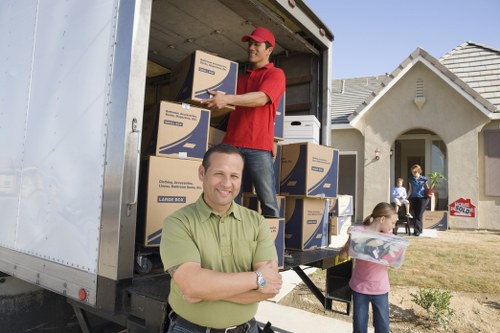 Risk assessment process for a removal operation should be systematic and recorded. A practical risk assessment will identify hazards, evaluate the level of risk, and implement proportionate control measures. Typical steps include:
- Site survey: inspect access routes, parking, stairs and lift availability before the move.
- Task analysis: assess the size, weight and fragility of items to be moved.
- Control measures: plan the number of staff, correct handling equipment, protective packing and vehicle arrangements.
- Emergency planning: confirm first-aid availability, contact protocols and incident reporting lines.
Risk assessments should be proportionate to the job size. For straightforward local moves, a checklist and photographic notes may suffice; for complex or commercial relocations an in-depth written assessment is recommended. Records of risk assessments help compliance and provide a clear trail if a claim or incident occurs involving a removal company.
Implementation and monitoring are as important as the initial assessment. After controls are chosen, the removals company must make sure they are followed: equipment is available and in good condition, staff understand assigned roles, and supervisors enforce safe behaviours. Supervisory spot checks and post-job reviews allow continuous improvement.
Creating a safety culture within a removals firm requires visible leadership and consistent enforcement of safety rules. Encourage reporting of near-misses and small incidents, investigate the root causes and adjust procedures accordingly. A company that actively manages insurance, trains staff, supplies correct PPE and follows a robust risk assessment process will minimise claims, protect its reputation and deliver safer moves for every client.